July 21, 2021

Yukatakai 2021 coming soon!

Dear friends and patrons, great news! 

Annual summer dances are coming this month!

On Saturday 31st of July Geiko and Maiko of Komayaka and Hanafusa okiya will perform in the Summer odori - Yukata Kai. You are welcome to come enjoy this 6 act performance.

* P.S. you will be able not only to admire the dance skills of Geiko san and Maiko san but also meet the new apprentices, known as shikomi-san, who might soon debut 

・:*:・゚☆   Time of arrival: 10.45 am slt

・:*:・゚☆ Time odori begin: 11.00 am slt

・:*:・゚☆ Time odori ends: 12.00 am slt

・:*:・゚☆    Your taxi: http://maps.secondlife.com/secondlife/Kyoto/188/205/31

Pictures after are to be taken in the room between exit and theater audience room. Maiko will attend photo shoot. During performance you may take pictures as long as they do not interfere the performance.

In case you would like to receive a poster, please contact Maiko Kikumaru(belliebeth) inworld.

July 6, 2021

Gion Matsuri (Konchiki Ondo) coming this weekend!

Gion Matsuri (祇園祭), the festival of Yasaka Shrine, is the most famous festival in Japan. It takes place over the entire month of July. There are many different events, but the grand procession of floats (Yamaboko Junko) on July 17 is particularly spectacular. Very enjoyable, are also the festive evenings preceding the procession (Yoiyama). From 2014, a second procession of floats was reintroduced on July 24 after a hiatus of 48 years. The second procession features fewer and smaller floats than the one on July 17.

The word Yamaboko refers to the two types of floats used in the procession: the 23 yama and 10 hoko. One of the main reasons the Gion Matsuri is so impressive is the enormity of the hoko, which are up to 25 meters tall, weigh up to 12 tons, and are pulled on wheels as big as people. Both yama and hoko are elaborately decorated and represent unique themes. The procession on July 17 features 23 yama and hoko, including most of the particularly impressive hoko, while the procession on July 24 features the remaining ten yama and hoko.

Another reason for the festival's impressiveness is its long and almost uninterrupted history. It dates back to 869 as a religious ceremony to appease the gods during the outbreak of an epidemic. Even today, the festival continues the practice of selecting a local boy to be a divine messenger. The child cannot set foot on the ground from the 13th until after he has been paraded through town on the 17th.

Ironically, the highlight events of Gion Matsuri do not actually take place in the Gion district, but rather on the opposite side of Kamo River. During the three days preceding the procession, the respective yama and hoko are displayed within about a half kilometer of the intersection of Karasuma and Shijo streets. While they are on display, some of the floats can be entered by tourists.

To mark the peak of Gion Matsuri celebrations, Maiko san from Miyagawacho Hanamachi (Komayaka and Hanafusa okiyas) will perform special dance called Konchiki ondo at the Yasaka Jinja pavilion. We welcome You and we also welcome your friends and family to join us on this special day in Kyoto Kagai sim.

Date: Saturday, 10th of July

Time: 11.00 am slt

After the performance photos with Maiko san can be taken :)

LM: http://maps.secondlife.com/secondlife/Kyoto/167/237/34

Poster created by Okaasan Toshiha of Komayaka okiya

July 1, 2021

July Kitsuke

Geiko Kikutsuru


Geiko Kikutsuru's semiformal ro kimono for July features refreshing stream on a light background. Golden holds the kimono close. The obi of Geiko Kikutsuru is tied in Taiko Musubi knot.
As all Geiko wear wigs styled in style worn by married women in Edo, the decorations are also limited - maezashi at the front, a comb and seasonal tama at the back.
Also her juban undergarment has blue summer flowers Nadeshiko, which is also a unique piece. In her hands she's holding a kago basket of pink color that resembles the color of some Asagao (morning glory flowers) on her kimono's hem. On her feet you can notice Rikyu Geta, and not the most commonly worn Atomaru geta

Geiko Kikumaru


Geiko Kikumaru's June semi-formal attire consists of subtle turquoise ro kimono and delicate golden obi. Her kimono features golden waves. "Ro" is a type of thin waved fabric used for natsumono (summer kimono) and you can easily distinguish it from others by its translucent stripes. This very classy way to weave silk is most popular and even be used for formal scenarios.
Her hair is decorated with decorative hairpin, that resembles a firework over a stream. Both stream and fireworks are considered distinctive summer designs. Whilst stream and water have cooling effect on a viewer, fireworks are part of the hanabi and other summer festivals.

Maiko Kikune


Maiko Kikune's ro hikizuri is gradient, from light blue at the top to purple at the hem. The main design is stream accompanied by seasonal summer flowers. This kimono is also ro and is perfect for hot summers in Kyoto. It is tied with gorgeous black obi that has giant floats, carrying many lanterns - this is significant symbol of Gion Matsuri. 
Under-kimono, know as nanajuban, is red and features 
He hairstyle is Ofuku and it is decorated with unique  kanzashi that feature fireworks. You can imagine how long it took a skillful artist to create each string and make it look like a firework exploding in the sky!

Maiko Kikushino


Maiko Kikushino is wearing subtle light pink hikizuri that depicts streams of cold white water with green leafs and summer flowers. It is a pity that this masterpiece can only be worn in summer! The obi is simpler yet is also worth attention - its is black with purple stream and holden leafs. In her hands she is holding kago, a kind of traditional purse that maiko and geiko carry with them. Kikushino san's hairstyle is wareshinobu and, as I have mentioned in my previous posts, Junior Maiko do not change their hairstyle right until the become seniors. With her hair decorated with hanakanazashi that feature summer flowers and several small uchiwa, Kikushino san is an embodiment of summer!

June 5, 2021

June Kitsuke

 Ah, Summer in Kyoto Kagai sim...Parks are covered with blooming hydrangea and water irises. The birds are relaxing in the shade of oaks and sycamores. You can undoubtedly feel that every inhabitant of the land is enjoying the summer heat. But Maiko and Geiko of Kyoko Kagai sim have no time for being lazy - you can spot them every day, walking towards their appointments; nevertheless they will be happy to greet you and show you around the sim. So be sure to visit Kyoto Kagai sim this month :)

Geiko Kikutsuru


Geiko Kikutsuru's semiformal ro kimono for August features tonbo (dragonfly) on a beige background. It is an absolute summer motif. The tonbo pattern is associated with the rich bounties of the earth and a good harvest and during the flight tonbo were also considered a symbol of courage and victory by warriors.
Green obi, with Kikyou (bell-flower) and several Asagao (morning glory) flower design, holds the kimono close. Both flowers are used in summer kimono and obi designs and patterns right up until end of September. The obi is tied in Taiko Musubi knot
Her Juban (underskirt) has a design created in Shibori technique (is a Japanese manual resist dyeing technique, which produces patterns on fabric).
Her katsura (wig) is decorated with small maezashi hairpin, kushi made from light wood and jade tama at the back.
Geiko have bigger choice in footwear than maiko - they can choose between several types of geta or comfortable zori, when weather is rainy/the area where they will be requires them to wear footwear

Geiko Kikumaru


Geiko Kikumaru's June semi-formal attire consists of subtle green ro kimono and checkered obi that also has geometrical pattern on it. "Ro" is a type of thin waved fabric used for natsumono (summer kimono) and you can easily distinguish it from others by its translucent stripes. This very classy way to weave silk is most popular and even be used for formal scenarios. 
It is tied with silver and black obi that has a geometrical motif and tied over it - a delicate white obijime.
Her elaborate geiko wig is decorated with Chidori hairpin. Chidori is the Japanese term for a plover. You can see it on kimonos as well as it is a mon(crest) of Pontocho Hanamachi. If we classify "chidori" as a seasonal motif, it would winter one. BUT winter motifs and the patterns are commonly featured on summer items to evoke the coolness of winter. 
The footwear Geiko Kikumaru is wearing are standard geta, different from the ones worn by her oneesan Geiko Kikutsuru.

Maiko Kikune


Senior Maiko Kikune has chosen subtle purple ro hikizuri for June. You need to look closely to admire the intricate flowery design that goes all over the kimono.
It is tied with black darari obi that goes well with hikizuri. 
Obiage is tucked into the obi - it is custom in Miyagwacho for their Maiko to start tucking obiage right after becoming Senior. It is different in other Hanamachi, for example in Gion Kobu Maiko start tying obiage when they preparing for erikae.
Obijime cord is white and purple, and on it is an elaborate golder butterfy pocchiri. This is the most valuable part o Maiko's costume.
Her hair is styled in Ofuku - Senior Maiko hairstyle and decorated with seasonal willow hanakanzashi, kushi (comb), smaller asagao maezashi, bira bira kanzashi at the front as well as hirauchi and jade tama at the back of the hair. Willow for a long time is associated with Geiko and Maiko world and is a symbol of grace and strength.

Maiko Kikushino 


In June you can see Maiko Kikushino wearing gradient ro hikizuri, that features summer flowers and grasses. The obi is also ro, and has stylized plant design on it.
As you already know, Kikushino san is a junior maiko and junior maiko have their hair styled in Wareshinobu hairstyle. This month's seasonal plant is willow therefore she wearing willow hanakanzashi, willow hanagushi and a cute fan maezashi.
When wearing semiformal outfit, Maiko san wear red juban, as you can see on the photo of Maiko Kikushino and her neesan Maiko Kikune, whilst geiko can choose between pink, red and even white and light blue. 
Footwear worn by Maiko Kikushino is standard for all maiko san and are called Okobo. The staps on them also indicate senority - red for juniors, pink and other colors for senior maiko. These clogs are hollow and inside a small bell is located, so when maiko san walk they make a very distinctive sound. 

June 2, 2021

Great news in Kyoto Kagai sim! The debut of Maiko Toshimomo of Komayaka okiya

Photo taken by Okaasan Toshiha
Maiko Toshimomo(left) and
Geiko Toshiha (right)

Kyoto Kagai sim is honored to announce the debut of 
 maiko Toshimomo of Komayaka okiya.
From the bottom of our hearts we wish her good luck and success on the path she has chosen

 Misedashi is always a big day for a young girl, that is   debuting. After being a shkomi and minarai for several   months, Maiko Toshimomo was finally officially   introduced  last week. She debuted under the wing of Geiko Toshiha, who is the Okaasan of the Komayaka okiya. 

 Several days before the misedashi, the walls of the okiya are decorated with Mokuroku - hand-painted posters, that are presented to the debuting maiko, by patrons or people from the hanamachi. The design on Mokuroku feature lucky designs and themes, as well as words of encouragement for a young Maiko.

 During the 3 days of the debut, Maiko Toshimomo wore an exquisite formal kuromotsuki and with her wareshiobu   hairstyle decorated with valuable bekkou kanzashi, that are   made of tortoise shell. Accompanied by her oneesan and the younger members of her okiya, they visited  establishments important to the okiya.

 During the official rounds, Maiko Toshimomo visited Hanafusa okiya too ^^

Photo taken by Okaasan Toshiha
from left to right: Shikomi Harumi(Hanafusa okiya), Geiko Kikutsuru(Hanafusa okiya),
Maiko Toshimomo(Komayaka okiya), Okaasan Geiko Toshiha(Komayaka Okiya), 
Shikomi Echo(Komayaka okiya) and Shikomi Mari (Komayaka okiya)

May 30, 2021

Marumage hairstyle by Kisetsu is now available!

Great news from kisetsu - high-quality Marumage hairstyle only for you!

The marumage hairstyle was commonly worn by married women all around Japan, where it was a popular trend during the Edo period but not so much in recent times so may be more difficult to spot. However, some women still wear their hair in this style especially in formal events such as weddings

In Japan there is even a festival named after this special hairstyle. The Marumage Festival originates from the story of geiko (geisha) who went to Senju-ji Temple to pray for a happy marriage with their hair styled in marumage style. Every year on April 17th, a parade of unmarried women in colorful kimono wends its way along the streets led by girls wearing flower-hats. (These days, anyone can sign up to join the parade.)

Kisetsu Marumage Hair is sold with a discounted price during The Wanderlust Weekend sale (May 29-30th). You can get a full fatpack for only $50L! Remember that this price is limited!

Your taxi to the shop: http://maps.secondlife.com/secondlife/Ashcan%20Consortia/103/161/18

Shikomi Kyoko and SHikomi Harumi were spotted at the Haru no Miygabi performance!

Apart from performers (Geiko Kikumaru, Maiko Kikune and Kikushino) and support squad from Kyoto Kagai sim (Okaasan Toshiha of Komayaka okiy and Geiko Kikutsuru of Hanafusa okiya), 2 new members of Hanafusa okiya were spotted - Shikomi Kyoko and Shikomi Harumi. It is a rare sight, as shikomi san spend most of the time studying, doing chores and assisting their older sisters in the okiya. But sometimes, during big events you can see them accompanying their neesans 

from left to right:
Geiko Kikumaru, Shikomi Harumi, Shikomi Kyoko, Maiko Kikune and Maiko Kikushino

Thank you! (Haru no Miyabi 2021 poster at Theater On The Hill)

 Dear visitors, family and friends, 

it is our distinct pleasure thank you for visiting Haru no Miyabi performance, directed by Geiko Kikumaru, and the production has been put together with the skill, and stories of my sisters Geiko Kikumaru, Maiko Kikune and Kikushino. Were are honored to  to perform for you. And all of us from Kyoto Kagai are humbled to be present in your company. 

I wish to also thank the Hill top Theater staff, directors and Shenandoah Docherty  for allowing us to perform as well as support ^_^

From left to right: Geiko Kikumaru(light blue), Maiko Kikune(gradient) and Maiko Kikushino(white)

May 28, 2021

Maiko Kikuyae


    ♥.══════════════════════════

     Watashi no namae wa Kikuyae desu

I am maiko in Hanafusa okiya of Kyoto Kagai sim (Second life)

        ════════════════════════ .♥

Kyoko was born in a small mountain village called Shiragawago in the Gifu prefecture of Japan. Her parents were workers in a nearby company, where they met each other. They were often out for work, so Kyoko had to take care for her three smaller siblings herself for a lot of the time. But even during that time, Kyoko didn’t lose that one interest she had all her life. One of her earliest encounters with these skills was at her aunt’s home, where she had seen a TV broadcast of geikos dancing. Their beauty and grace immediately fascinated the little girl and the images didn’t leave her mind since then. It was shortly after her 15th birthday, that Kyoko decided to leave school and instead to apply at an Okiya in Kyoto; to make her dream come true and learn about the traditional arts. After a long good-bye, she traveled to the big city and finally applied there at Hanafusa Okiya, where she was allowed to begin her training as a Shikomi. The long way of becoming a Maiko has begun...

May 8, 2021

Haru no Miyabi coming soon!

It is a pleasure of mine to invite you to the 2021 Haru no Miyabi performance. 

春の雅 Haru no Miyabi in English means Spring Elegance therefore this years theme is centered around the Spring in Japan, each part artistically created and written by the Geiko and Maiko of Hanafusa Okiya*. I hope that you will enjoy this years performance with us.

* Geiko ("Art's child") are traditional Japanese artist and Maiko ("dance child") are trainees. Both in Rl and in Sl there are women who learn the traditional Japanese arts such as music, dance, poetry, hospitality etc. Hanafusa okiya is a boarding school for such women, established in 2012 located at Kyoto Kagai sim.


🌸 Date&Time: May 29th 12 pm slt

🌸 LM: http://maps.secondlife.com/secondlife/TheaterOn%20The%20Hill/193/162/37

We are looking forward to welcoming you at the Theater on The Hill. Please stay safe, wash hands and be cautious about the virus

🌸   Let's welcome the Spring together   🌸

May 6, 2021

May Kitsuke

The odori and sakura season is now officially over and the Karyukai returns to it's normal life. Maiko san and Geiko san start taking their lessons again and also more ozashiki are taking place on the Kyoto Kagai sim as well. Please enjoy reading my post about the May kitsuke of Hanafusa okiya Geikos and Maikos

Geiko Kikutsuru's semiformal outfit  for May features water flows and summer flowers on the light blue background. This kimono can be worn from beginning of May right up until September.
It is tied with exquisite silk obi that goes well with hikizuri. The design on the obi features the iconic summer sight - the lit up paper lanterns of the Gion Matsuri Festival. As all Geiko wear wigs, that resemble a style worn by married women during Edo, the decorations and accessories are also limited - maezashi at the front, a comb and seasonal tama at the back

Geiko Kikumaru's May semiformal attire consists of light blue kimono with golden clouds and colorful botan (peonies) and a golden woven obi that goes perfect with the kimono. Classically, botan is associated with summer (especially early summer) as that is when the flowers bloom naturally but there are some types that bloom in Autumn and even Winer. As all geiko in Kyoto she is wearing a wig styled in Geisha Shimada style. It also needs to be appropriately decorated - Kikumaru san has chosen a elegant wooden comb and a small pink peony maezashi pin. 

In May you can see Maiko Kikune wearing subtle hikizuri, that gradates from light yellow at the top to light purple at the bottom. This piece features chou(butterflies), sakura as well as spring grasses. Obi is made in Hakata style and fits the kimono perfectly. As a Senior Maiko, she is wearing triple hanakanzashi with march seasonal flower appropriate for senior maiko - Ayame (iris).

Maiko Kikushino is wearing white hikizuri with fuji(wisteria) design. This common flower motif symbolizes longevity, peace and harmony therefore you can spot it on the bridal kimono. Wisteria plants are known to have very long lifespans, one of the oldest wisteria trees in Japan is 144 years old! The light purple color of the wisteria goes perfectly with the vibrant fuji kanzashi in her Wareshinobu hairstyle. The obi is black, decorated with red and golden thread, and has geometrical motif on it and holds the kimono close.

May 5, 2021

Miyagawa Ondo KYO ODORI Performance

 During the month of April, the kagai (geisha district) of Miyagawacho in Kyoto puts on the "Kyo Odori" every year. The grand finale of their odori is their famous Miyagawa Ondo dance.

Zashiki-gi created as its first dance this famous piece. It was performed by the geiko and maiko of Hanafusa Okiya and Komayaka Okiya on the Kyoto Kagai sim.

If you missed the performance in world, we can share it with you here!

Please tell us what you think!

Dance, outfits of the geiko and hair created by Zashiki-gi. Stage created by Hanafusa Okiya. ♥

May 4, 2021

Okiya News! New member of Hanafusa okiya - Shikomi Kyoko

Kyoko was born in a small mountain village called Shiragawago in the Gifu prefecture of Japan. Her parents were workers in a nearby company, where they met each other. They were often out for work, so Kyoko had to take care for her three smaller siblings herself for a lot of the time. In this way, she already learned quite early to stand on her own feet, although still being quite young… and still having to attend school. But even during that time, Kyoko didn’t lose that one interest she had all her life. As far as she remembered, she was always in love with the traditional japanese arts like: dances, music or caligraphy.

One of her earliest encounters with these skills was at her aunt’s home, where she had seen a TV broadcast of geikos dancing. Their beauty and grace immediately fascinated the little girl and the images didn’t leave her mind since then. Sometimes they were not that important, as when she was caring for her siblings… but they never really left. And her family knew, that one day, little Kyoko would leave the village for her dream. It was shortly after her 15th birthday, that Kyoko decided to leave school and instead to apply at an Okiya in Kyoto; to make her dream come true and learn about the traditional arts. After a long good-bye, she traveled to the big city and finally applied there at Hanafusa Okiya, where she was allowed to begin her training as a Shikomi. The long way of becoming a Maiko has begun... but Kyoko was sure that she would fully go there.

May 3, 2021

Kyo Odori 2021 at Kyoto Kagai sim

This year was also extremely special for Kyoto Kagai sim and Kyo Odori because the new okiya took part in the production process. The name of the okiya is Komayaka and it's representatives at Kyo odori were 2 Geiko - Okaasan geiko Toshiha (head of the okiya) and Geiko Mieha. 

For those who do not know, every Hanamachi (geiko district) in Kyoto has several main annual dance performances - one takes place in spring and one in autumn. Most famous of all is possibly the Miyako odori, performed by Maiko and Geiko from Gion Kobu Hanamachi but I insist that every odori of any hanamachi is worth witnessing!

In SL, Miyagawacho Hanamachi of Kyoto Kagai sim continues the RL tradition by holding two annual public odori (apart from other smaller odori): Kyo odori in April and Mizuekai in October. To bring You a 1.5 hour performance takes several months of preparations and rehearsals - everything to provide the audience with the highest level of hospitality. Every move of the fan, every poem, every story - all this comes sincerely from the hearts of the performers and we hope that all our guest get to feel it.

Now, lets have a closer look at this years Kyo odori (every year the theme and acts change so previous odori and the odori that will come in future years will be different):

Peformers: Geiko Toshiha (Komayaka okiya), Geiko Kikutsuru (Hanafusa okiya), Geiko Kikumaru (Hanafusa okiya), Geiko Mieha (Komayaka okiya), Maiko Kikune (Hanafusa okiya), Maiko Kikushino (Hanafusa okiya).

Tea ceremony

Tea ceremony is part of Kyo odori and is performed for guests and patrons before the performance. This year the role of otemae or the person who was preparing tea and utensils belonged to Maiko Kikune. 

The role of ohikae, assistant at the tea ceremony who helps serve tea and sweets, was performed by maiko from Hanafusa okiya - Maiko Kikushino.
After tea ceremony finished, guests were welcomed into the performance hall.


Act 1 : "Maiko no Sakura sama"


Maiko san gathering in front of the large sakura at Maruyama park, greeting Spring welcome

🌸 Written and Choreographed by Geiko Kikumaru

Act 2: "Haru no Hi"

With fans of silver and red they enter the stage wearing their most formal outfits, putting words to what makes Spring special to them

🌸Poems written by all Hanafusa okiya Geiko and Maiko, choreographed by Maiko Kikune

Act 3 and Act 4: "Saigyo and the Cherry tree"


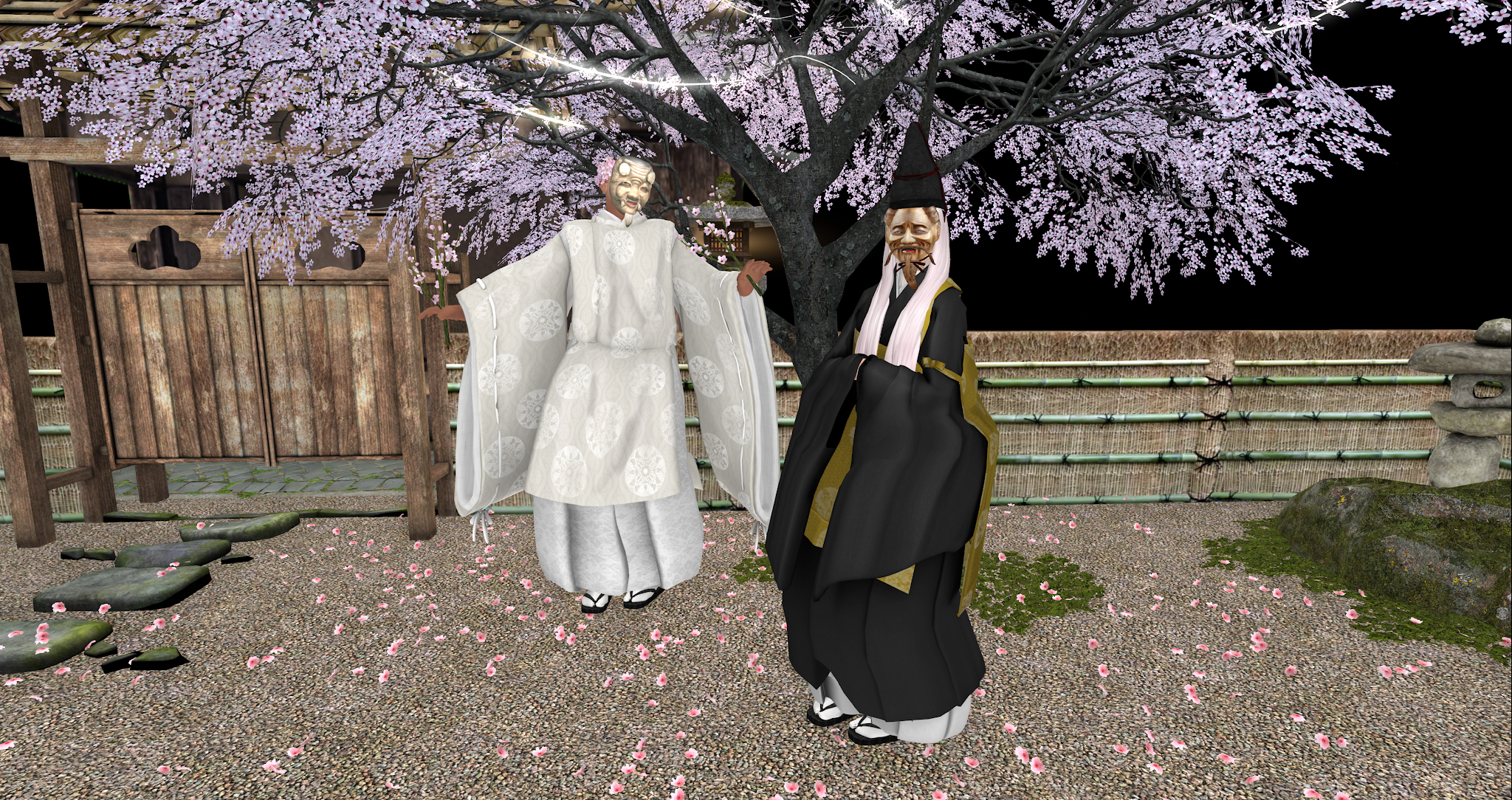
A kabuki play that tells a story  about Saigyo (famous Japanese poet of the Late Heian period) and a mystical event that once happened to him during Springtime

🌸 Written and choreographed by Maiko Kikushino

Act 5: "Oneesan wa Kyoto"

"Being a Geiko is already a great responsibility, but what happens when a Geiko also becomes an oneesan ("older sister", mentor) ?..."

🌸 Written and choreographed by Geiko Kikumaru

Act 6: "Miyagawa ondo"

Miyagawa ondo, the traditional ending of Kyo odori, Geiko and Maiko in their bright spring costumes welcome Spring in front of the Miyagawacho Kaburenjo theater. This year the dance was created from scratch by Geiko Toshiha and also performed for the first time!

🌸Created and Choreographed by Geiko Toshiha

Heian Reitaisai Hono Buyo 2021

In the beginning on April, Geiko san and Maiko san from Hanafusa okiya performed during the Heian Reitaisai Hono Buyo festival. These annual dances are performed on special platform at Yasaka Jinja shrine and dedicated to the arrival of the spring. This year's performers were: Geiko Kikutsuru, Geiko Kikumaru, Maiko Kikune and Maiko Kikushino.