February 28, 2021

Baikasai at Kitano Tenmangu (2021)

 Yesterday, Kitano Tenmangu shrine for the first time held Baikasai - Ume Blosom festival. The outdoor tea ceremony was performed twice - first at 3 am slt and second - 10 am slt so that guests and patrons from different timezones could enjoy this event.

Geiko Kikutsuru let the guests into the specially built for this event tent and told the story of about Kitano Tenmangu Shrine, the plum blossoms and about the festival

The tea ceremony was performed by Geiko Kikumaru (otemae), whilst Maiko Kikune and Maiko Kikushino (ohikae) helped with serving wagashi and tea.

Those who have missed the event we would like to encourage to visit Kitano tenmangu temple grounds of Kyoto Kagai sim so that they could enjoy the blooming plum trees. The best time to view the blossoms is the period from the end of February until the middle of March, when ume trees with either red or white blossoms, and both single and double-flowered blossoms fill the Baien Ume garden with their sweet fragrance.


February 23, 2021

Kitano Tenmangu & Ume Gardens Tour, Wednesday 24th @ 10 am slt

Tomorrow, Wednesday 24th at 10 am slt, please join us for an informative tour around Kitano Tenmangu Shrine in the Kamishichiken district of Kyoto, as we wander through the sweet perfume of the Ume gardens and finally enjoy tea and wagashi treats in the pavilion where the tour guide will answer any of your questions.

Date&time: Wednesday 24th of February, 10 am slt

Your taxi: http://maps.secondlife.com/secondlife/Kyoto/78/43/32

Baikasai coming this weekend!

 Dear guests and patrons,

Kyoto Kagai Sim this weekend invites you to enjoy Baikasai (first plum blossom festival ). This centuries old festival will take place on the grounds of Kitano Tenmangu shrine in a special tent-like construction, that is surrounded with blooming ume (plums). In the centerstage of the festival lays an outdoor tea ceremony or "nodate" performed by skilled geiko and maiko from Hanafusa okiya SL. 

This year tea ceremony will be held 2 times - 3 am slt and 10 am slt, so that guests and patrons from different time zones could come and enjoy first plum blossom festival with us!

Date&Time: February 27th, 3 am slt and 10 am slt

Your Taxi:  http://maps.secondlife.com/secondlife/Kyoto/35/43/32

February 21, 2021

February Kitsuke

Spring is slowly but firmly sis strating to take over Kyoto Kagai sim. Although there's still some snow the ground, first plum blossoms are starting to peak through the icy harden barks. One by one, all of the Plum trees will soon take over the area with their beautiful and magnificent sweet scent

Geiko Kikutsuru

For this month, Geiko Kikutsuru has chosen to wear gradient pink kimono with spring motif: ume blossoms, pine, bamboo leaves, sakura petals. It is tied with elegant vine obi that has a hand-painted kimono and silk on a hanger. 
Her juban is pink and features blossom pattern. Geiko also use red juban but mostly for the formal events when they wear kuromontsuki.
Sometimes geiko can wear warm fur shawls during winter, epsecially on the colder days.
Kikutsuru san is wearing a wig, styled in Geiko Shimada style also known as Chuu Taka Shimada. It is decorated with carefully chosen seasonal maezashi pin featuring ume blossom.
On her feet you can spot winter geta that are perfect for cool winter ways and protect Geiko's white tabi from the snow.

Geiko Kikumaru

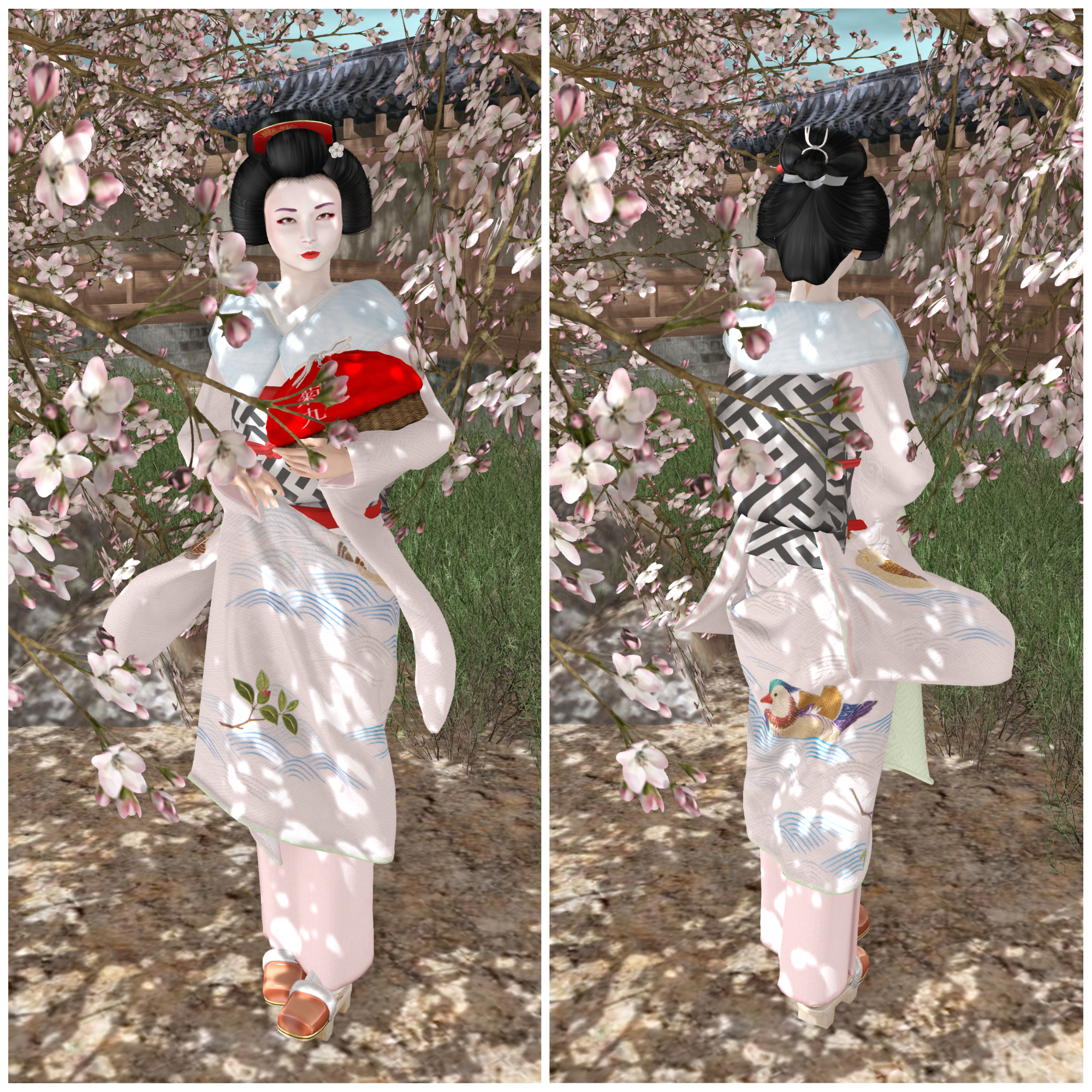
Her sister and imouto, Geiko Kikumaru, decided on wearing beautiful and very expensive white geiko hikizuri, with water and mandarin ducks motif on it. This piece is held with silver obi that fits the kimono perfectly. The motif on the obi is known as "sayayagata" and it is a pattern of interlocking manji (swastika). In South Asia, the Manji is omnipresent as a symbol of wealth and good fortune and is used as a religious symbol in Buddhism.
As a finishing touch, Kikumaru san has added a small plum bosom maezashi(small hairpin) to her katsura.
In her left hand Geiko Kikumaru is holding a bright red kago that has Kikumaru san's name embroidered on it. This is a special kago that was gifted by okaasan on the day of the Misedashi way back in 2013.


Maiko Kikune

Maiko Kikune's February kitsuke consists of fabulous light blue hikizuri with hand-painted spring blossom motif and a golden obi, different from two of her Geiko sisters'  - it is much longer(over 7 meters!) called darari obi. Please notice a delicate pocchiri, tied with red obijime - this is the most expensive element in the maiko's wardrobe. 
Her juban is bright red with plum and sakura blossoms on it. As mentioned before red juban can be optional by geiko but is a must for maiko.
During Setsubun Maiko san in some districts switch from their normal hairstyles to more elaborate ones. This year from Maiko Kikune wore Oshidori mesu hairstyle, which is quite rare and means to mimic the look of a male mandarin duck. You can see a large and eye-catching kusudama hanakanzashi decorating this unique hair.

Maiko Kikushino

The youngest flower of the Hanafusa okiya bouquet, Maiko Kikushino, is wearing light green hikizuri with blossom arabesque and kusudama design. It is tied with beautiful black Darari Obi that features maioghi and kotsuzumi. The style of the Hikizuri of Maiko Kikushino are getting more mature and simplistic which means that she is progressing on her path of a Maiko.
For Setsubun Maiko Kikushino switched from Wareshinobu to Osome hairstyle. This hairstyle is worn by junior maiko in their second or third year into profession.
Both Maiko Kikune and Kikushino are wearing special style of geta, known as Okobo or Pokurri. These are only reserved for the Maiko and you can tell he rank by looking at the straps holding the foot - if you see red than it means that the wearer is Junior Maiko and if you see pink or other - Senior. You can notice the difference in the picture above

Setsubun at Kyoto Kagai sim (2021)

Setsubun is the day preceding risshun that is the first day of spring according to the old Japanese calendar. On the day of Setsubun, many celebrations are held. Especially in Kyoto Kagai SL. Maiko san and Geiko san from Hanafusa okiya, dressed in their formal attire, danced sacred dances on the stage of the Yasaka Jinja shrine. After the dance, they participated in ancient auspicious custom of throwing roasted soybeans. While throwing they chanted: “In with Fortune! Out with Evil” in order to prevent evil ogres from entering the houses of the guests and patrons of the Kyoto Kagai.

P.S. if you eat the same number of beans as your age you will have a year of good health! Itadakimasu!!

Participants: Geiko Kikutsuru, Geiko Kikumaru, Maiko Kikune and Maiko Kikushino


January 31, 2021

Setsubun at Yasaka Jinja 2021 coming on February 3rd

 During Setsubun people throw beans, (mamemaki) to cleanse away all evil of the former year and to chase away disease causing spirits (Oni). Remember to shout "Demons out! Luck in! (Oni wa soto! Fuku wa uchi!) At this event you will see the maiko and Geiko in gorgeous kimono performing two dances. This is a festival of the new year not to be missed. We hope you will help us to have a wonderful new year of good luck and health in the 2021 :)

Your taxi to Yasaka Jinja - http://maps.secondlife.com/secondlife/Kyoto/167/237/34

Setsubun Ozashiki 2021 coming this Saturday February 6th!

 “Obake” is like Japanese Halloween and its part of Setsubun celebrations. This custom is now confined mainly to the hanamachi (geisha districts), where maiko but most often geiko go from tea house to tea house and perform a skit while dressed in outrageous costumes (not only as historical figures but even as disney princesses!). One of the rules of Obake is that things are topsy-turvey - old dress as young, men dress and women and vice-versa.

We welcome you to join celebrations at Hanahusa ochaya this Saturday :)

Your taxi: http://maps.secondlife.com/secondlife/Kyoto/231/181/31

Shigyoshiki Kitsuke of Hanafusa okiya members (2021)

"Shigyoshiki" refers to the beginning of a new year in Kyoto's five hanamachi or "flower towns". Wearing black formal kimono, called Kuromontsuki, the Geiko and Maiko of the neighborhood renew their vows and visit the local ochaya(teahouses) and important patrons to wish the beginning of a prosperous new year. Many beautiful pieces were spotted and it was decided to write a post that would focus on the formal kitsuke worn during the Shigyoshiki 2021 by Hanafusa Geiko and Maiko

Geiko Kikutsuru

Geiko Kikutsuru's Kuromontsuki is one of a kind and has many multi-seasonal and eye-catching motifs that are hand-painted - strong boats fighting the high waves, pine etc. It is tied with golden Darari obi, that not only gives the finishing touch the ensemble but also supports the back of geiko, as the kimono, especially formal kuromontsuki, are extremely heavy. In Miyagawacho, Geiko use special purple obijime (cord that is tied to the obi) when they wear formal kitsuke. This is a tradition unique to Miyagwacho Hanamachi. 

The wig Kikutsuru san is wearing in japanese is called Katsura, and it is styled in Geiko Shimada style. For formal events, kanzashi hairpins that are used for decorating katsura, are made from most precious and luxurious materials, such as tortoiseshell, gold, expensive stones etc. Tortoiseshell kanzashi are most unique and antique as nowadays the craftsmen that work with this material are almost non-existent. You can also spot the special rice husk maezashi with a dove, worn both by geiko and maiko. On the other side there is a special new year maezashi with the symbol of this year - an ox.

Geiko Kikumaru

Geiko Kikumaru san is wearing full geiko set with kuromontsuki and oshiroi. Her formal black kimono features waves and a matsu(pine tree). Pine trees are a evergreen and show their strong green leaves even in a hard and cold winter. The energy of the pine tree makes it in Japan a symbol for strength and long life

It is tied with white and golden obi that has a flower motif. Geiko's obi (apr. 440 cm long) are bit longer than simple women's obi. Also, for geiko's obi, patterns are created upside down, so when it is tied in Geiko Taiko knot, the pattern will have the correct position, facing upwards.

She is wearing a katsura wig, same as her oneesan Geiko Kikutsuru. Kikumaru san has decorated it with Bekko (tortoiseshell) comb that features mon of Hanafusa okiya, Bekko Kogai at the back and a traditional dove and rice maezashi (worn only a small period of time during January). Though worn by both Maiko and Geiko, these maezashi are placed on different sides of the hairstyle.

Maiko Kikune

Kuromontsuki that Kikune san wore for Shigyoshiki featured tsuru(crane), waters, matsu, ume(plum blossoms), chrysanthemums - a perfect design for winter and springtime forma events. Tsuru represents good fortune and longevity, matsu - strength, ume - symbol of fore-coming spring and chrysanthemums - longevity, rejuvenation as well as it is mon of Hanafusa okiya. It is tied with long Darari obi (apr. 6.8m) with auspicious chrysanthemum created with golden threads on light yellow background. This obi is very special as it is used during misedashi debuts. Unfortunately not seen at this picture, at the end of every maiko obi there is crest of the okiya girl is part of. No obijime or pocchiri are worn with formal outfit by Maiko.

Formal wear also means that Senior maiko will change from ofuku hairstyle to Yakko Shimada. As well as geiko san, Maiko san too are given opportunity of wearing gorgeous and expensive kanzashi - if you look at the hair of Kikune san, you can notice Bekko Kushi (comb) with Hanafusa okiya mon, Bekkou Hirauchi, Jade Tama, special January daikan (front) kanzashi, maezashi with bira oghi and small pin called bira dome. For Shigyoshiki both Geiko, Junior and Senior maiko wear rice husk maezashi with eyeless dove - rice grains can be given to customers and are considered symbols good luck and fortune.

Maiko Kikushino

Maiko Kikushino san wears most colorful and elaborate kuromontsuki in the okiya. This exact piece features sho chiku bai or "three friends of winter" - pine, bamboo, and plum. The evergreen pine represents longevity and symbolizes renewal, flexible bamboo symbolizes longevity and represents endurance and strength and plum blossoms are the first flowers of spring, representing the renewal. The obi was carefully selected for this special event as is created with beige and golden silk threads. As junior maiko, she ties obiage cloth on the top of the obi, rather than seniors who tuck it into.

As she is a maiko, her own hair is styled, even during formal events as Shigyoshiki, into Wareshinobu hairstyle. Decorated with elaborate bekkou kushi, Bekkou Hirauchi with coral Tama, carefully selected maezashi with seasonal hanakanzashi, more colorful than senior maiko. As for the rice husk maezashi with eyeless dove - not only grains bring luck, but also the eyeless dove has its special meaning - maiko or geiko fill in one eye and ask guest/very special person they like to draw the other for good luck in the coming year. This tradition differs from hanamachi to hanamachi, nevertheless it is considered as lucky charm.

Shigyoshiki in Kyoto Kaburenjo (2021)

This month Kyoto Kagai sim hosted Shigyoshiki - annual traditional opening ceremony, that marks the start of another business year in the Karyukai. Geiko and Maiko of Hanafusa okiya gathered at Miyagawacho Kaburenjo theater, wearing most formal black kimono called Kuromontsuki and renewed their vows for the new year. This is one of the few occasions when patrons and guests can see all of Kagai members gathered together wearing full regalia.


After the vows were pledged, maiko and geiko offered sake and, specially prepared for this event, osechi (traditional Japanese New Year foods).
A new year, a new beginning, an empty sheet of paper where you can write anything you wish for. We hope that 2021 will bring You, Your family and friends many delightful days, filled with joy and happiness. With gratitude in our hearts, we sincerely thank you for your support and humbly hope that You will continue to support us in the future "Yoroshiku otaomoshimasu" 

from left to right: Maiko Kikune, Maiko Kikushino, Geiko Kikutsuru and Geiko Kikumaru

January 11, 2021

Shigyoshiki 2021 at Kyoto Kagai sim

Konnichiwa dear guests and patrons of Kyoto Kagai sim,

Maiko and Geiko of Hanafusa okiya invite You, Your family and friends to take part in one of the most important event in life of our sim - Shigyoshiki.

Date: Saturday 16th of January

Shigyoshiki is the annual (traditional) opening ceremony in Kyoto that marks the start of another year for Kyoto’s Geiko and Maiko. They gather in their local hanamachi wearing formal black kimono and renew their vows for the new year. The most successful members of the Kagai of the previous year for their district receive an award of excellence.

Following the ceremony, the Maiko and Geiko visit the local tea houses and business establishments to wish the start of an auspicious and prosperous new year.

LM: http://maps.secondlife.com/secondlife/Kyoto/188/205/31

After the even we encourage you to taste the celebratory sake and take photos with Geiko and Maiko in their best attires :)

January 2, 2021

Yasaka Jinja is decorated for the New year!

 Yasaka Jinja is decorated for the New year with precious décor only up for this special time of year.

With this also food stalls and games are ready to be played and tasted!
Come enjoy games with friends, maybe you will win some prizes too!

Happy  New Year from everyone of us in Kyoto Kagai
May the New Year bring you prosperity and peace

December 10, 2020

❄❅❆❉❊☃ Merry Holidays from Hanafusa okiya ❄❅❆❉❊☃

 It is that time of year again when the snow is falling gently to the ground in Kyoto Kagai, this year we have a warming cottage for you to enjoy, with gifts under the tree, get your strength before you go outside to enjoy ice skating or other fun things in the Snow! - follow the landmark below, on behalf of Hanafusa Okiya we wish everyone a merry Holiday! 

 (gifts are bought for 10 Lindens and contains several items)

Landmark: http://maps.secondlife.com/secondlife/Kyoto/203/140/28

December 4, 2020

First chanoyu(tea ceremony) of Maiko Kikushino

Today, Friday 4th of December, Maiko Kikushino performed her first tea ceremony for Okaasan Kikuyu and her okiya sisters. This means that soon she will be entering her saninmae rank or, in other words, soon Hanafusa okiya will celebrate Kikushino chan becoming Senior Maiko. 

Omedetou san dosu!

“Meanwhile, let us have a sip of tea. The afternoon glow is brightening the bamboos, the fountains are bubbling with delight, the soughing of the pines is heard in our kettle. Let us dream of evanescence and linger in the beautiful foolishness of things.” (Okakura Kakuzō)

December 1, 2020

December Kitsuke

Geiko Kuktsuru is wearing high-class black kimono that has snowflakes and snow-covered tops of bamboo - a perfect wintery design! It is tied with bright orange obi that has auspicious motifs, for example Uchide-no-Kozuchi - the Japanese Lucky Mallet, which is one of many treasures seen carried on a takarabune or treasure ship. It is said that the mallet has the ability to alter a person’s size and the one carried by one of the seven gods of luck can even grant you wishes. 

In December, Geiko Kikumaru decided to wear an eye-catching semiformal kimono with chrysanthemums and waves on the blue background. The pattern is located under the waist line and is a perfect winter design for a Geiko. It is tied with colorful stripe obi, that was bamboo. Both Kimono and Obi belong to Kikumaru san and were part of the wardrobe ordered for her erikae. Obiage and obijime are of red color and go well with the ume(plum) blossoms on the juban.

For December Maiko Kikune san has chosen deep green hikizuri with hand-painted plum tree and bamboo leaves covered in snow. A truly winter masterpiece! Her obi has orange background with golden pattern. As senior maiko, she continues to wear Ofuku hairstyle, decorated with seasonal kanzashi. This month, her kanzashi feature bamboo leaves with special small "tablets" that will be signed by her 2 favorite kabuki actors during Kaomise soken

Maiko Kikushino is wearing beautiful maroon colored hikizuri with pine needles, momiji and gingko leaves. It is tied with beautiful golden Darari obi, that is tied each time by a skilled otokoshi or sometimes even okaasan. Her hair is decorated with special December kazashi, that feature colorful assortment of lucky charms and two two maneki(tiny blank tags), which will be autographed by her 2 favorite Kabuki actors during Kaomise Soken. This is Junior version of the kanzashi worn by maiko during December

* Kaomise soken - During the first week of December maiko visit the Minamiza theater and have the tags of the maneki kanzashi signed by their favorite kabuki actors.